
When people think about a beautiful smile, the focus usually lands on the appearance of teeth. While bright and straight teeth are certainly important, they represent only one part of the picture. Your gums also known as the gingiva serve as the essential foundation for every single tooth in your mouth.
Without healthy gum tissue, even the most aesthetically perfect teeth are at risk of instability and loss. Research from the American Dental Association and the Mayo Clinic highlights that oral health is a window into your general health. By prioritizing your gums, you are doing more than protecting your smile you are protecting your entire body.
Healthy gums are generally a firm, pale pink shade. The tissue should not appear bright red or purple, as these are signs of inflammation.
The surface of healthy gums has a stippled texture that looks similar to the skin of an orange — smooth, firm, and resilient.
Healthy tissue fits snugly around the neck of each tooth. There should be no visible gaps or deep pockets between the gum and the tooth surface.
Healthy gums should not be painful to the touch and should never bleed during routine brushing or flossing. Bleeding is always a signal worth investigating.
Your oral health is a window into your general health. By prioritizing your gums, you are not just protecting your smile — you are protecting your entire body from systemic complications.

Comprehensive gum health evaluations at Alani Dental — Jacksonville & Fleming Island, FL
Gum disease is a leading cause of tooth loss in adults but is often silent in its early stages. Understanding how it progresses can help you act before permanent damage occurs.
Gingivitis is the earliest and mildest form of gum disease caused by plaque accumulation. When plaque is not removed through daily oral hygiene, it produces toxins that irritate the gum tissue. The good news is that gingivitis is fully reversible with professional cleanings and improved home care.
If gingivitis is left untreated, it progresses to periodontitis. The body's immune system responds to the spreading infection by breaking down the bone and connective tissue that hold the teeth in place. Periodontitis is a chronic condition that requires professional intervention to manage.
| Feature | Healthy Gums | Gingivitis | Periodontitis |
|---|---|---|---|
| Tissue Color | Pale pink | Red or dusky red | Bright red or purple |
| Bleeding | Never | During brushing | Easy and frequent |
| Pocket Depth | 1–3 mm | 2–4 mm | 5 mm or more |
| Bone Levels | Stable and intact | Minor inflammation | Permanent bone loss |
| Tooth Stability | Firmly attached | Stable | Loose or shifting |
Modern medical research has established a strong link between oral infections and systemic health issues. Because the gums are highly vascular, any infection in the mouth can allow bacteria to enter the bloodstream and travel to other parts of the body.
Chronic inflammation in the gums may contribute to inflammation of the arteries and increase the risk of heart disease. Studies from the CDC and NIH support this oral-cardiac connection.
Gum disease can make it harder for the body to control blood sugar levels, and conversely, high blood sugar can make gum infections more severe — creating a two-way relationship between these conditions.
Bacteria from infected gums can be inhaled into the lungs, potentially increasing the risk of pneumonia and other respiratory infections — especially in vulnerable patients.
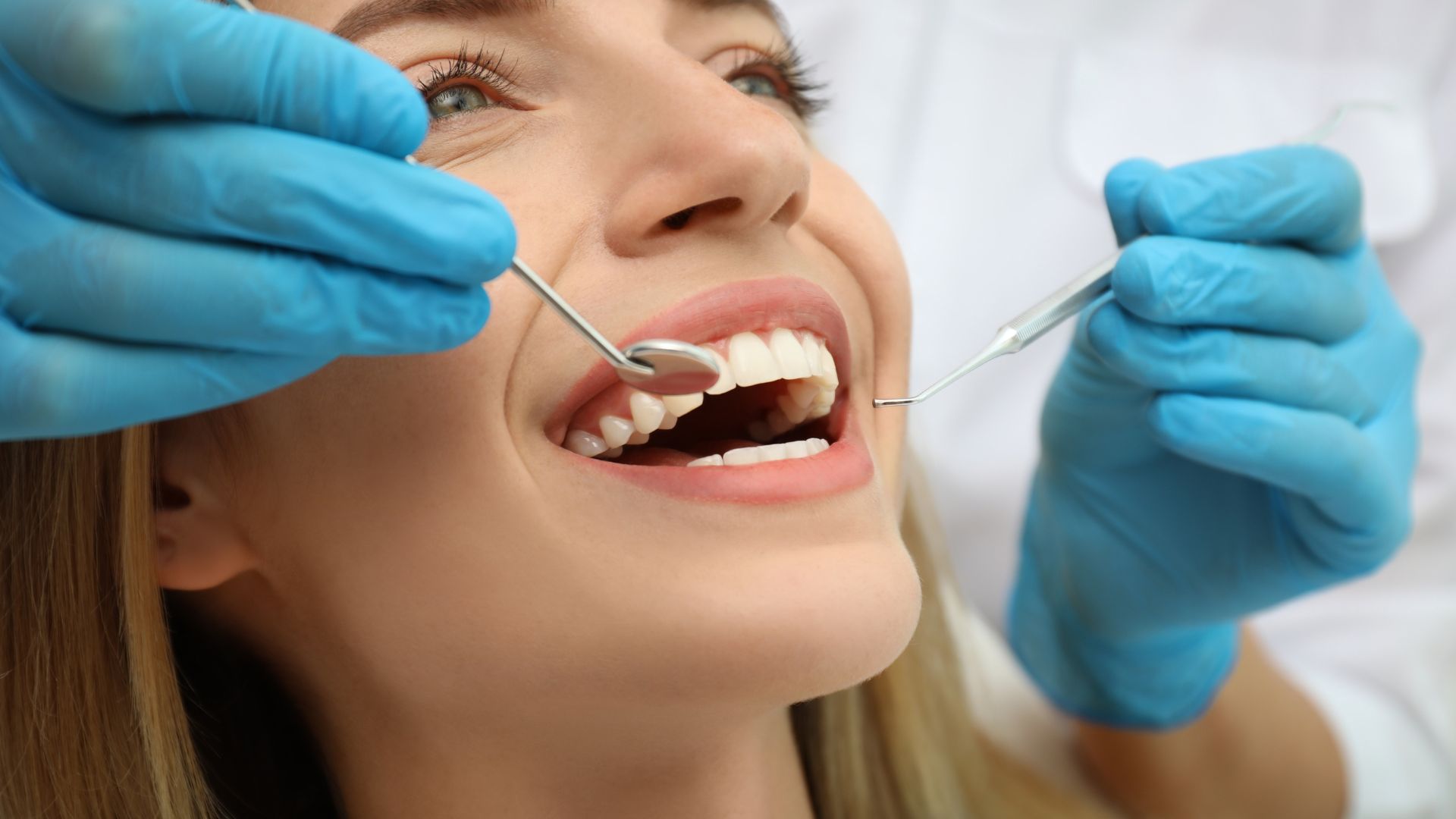
Every routine checkup includes a thorough gum evaluation. We use a periodontal probe to measure pocket depths and identify if attachment has been lost.
Plaque can harden into tartar that only professional tools can remove. Our hygienists provide gentle yet thorough cleanings to keep your gums healthy.
For early to moderate periodontitis, this deep cleaning procedure removes plaque below the gum line and smooths tooth roots to help gum tissue reattach.
Use a soft-bristled toothbrush at a 45-degree angle toward the gum line to remove plaque where it starts.
Flossing is the only way to remove debris and bacteria from between the teeth where a toothbrush cannot reach.
A therapeutic rinse can help reduce the number of bacteria in your mouth and fight plaque formation.
Smoking and chewing tobacco significantly increase the risk of gum disease and impair healing after treatment.

If you are considering Invisalign, veneers, or other cosmetic improvements, you must have a healthy gum foundation first. Attempting to move teeth or place cosmetic restorations on top of diseased gums can lead to failure and costly complications. At Alani Dental, we always ensure your gums and bone are strong enough before any cosmetic treatment begins.